
Innovation in practice
From research to real-world care IMAGINE accelerates the development, testing, and implementation of image-guided interventions.
REAL WORLD CARE
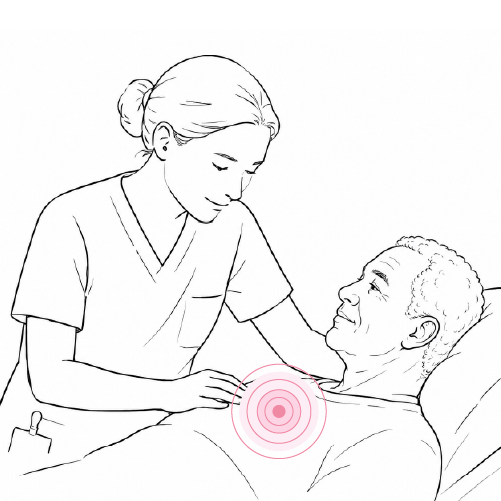
Innovation moving toward real-world care
Across IMAGINE, clinicians, engineers, researchers, and industry partners work together to develop and implement image-guided innovations that can improve how patients are treated.
IMAGINE starts with a clinical challenge and focuses on accelerating safer, more precise, and less invasive care.
TECHNOLOGIES
Technologies shaping precision care
IMAGINE combines imaging, AI, sensors, radiotherapy technology, data infrastructure and implementation science. The techniques are not separate tools, but are meant to be connected into a larger innovation pipeline.
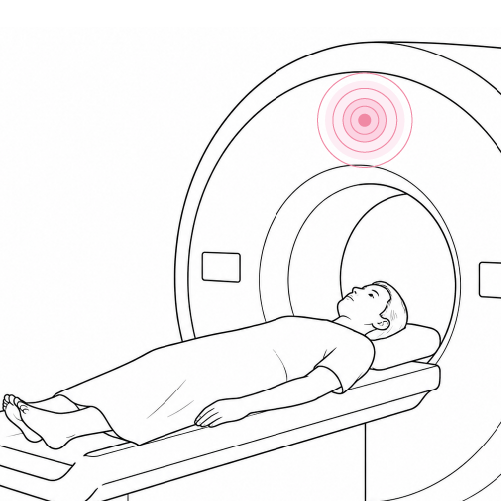

Medical imaging
Medical imaging is the foundation of image-guided interventions. Techniques such as MRI, CT and cone-beam CT (CBCT) allow clinicians to visualise tumours, organs and anatomical changes before, during and after treatment. Within IMAGINE, imaging is not simply used for diagnosis, but becomes an active part of treatment planning, guidance and evaluation.
How IMAGINE applies this

MRI-guided and adaptive radiotherapy
Modern radiotherapy increasingly adapts treatment to the individual patient rather than relying solely on a treatment plan created before therapy begins. MRI-guided radiotherapy and MR-Linac technology allow clinicians to respond to changes in anatomy, tumour position and delivered dose during treatment.
How IMAGINE applies this
More precise treatments, fewer unnecessary interventions and care tailored to each patient.

Artificial intelligence
Artificial intelligence can analyse complex medical images and treatment data faster and more consistently than traditional methods. Rather than replacing healthcare professionals, AI provides decision support that helps clinicians work more efficiently while maintaining expert oversight.
How IMAGINE applies this
A key focus is developing AI that is reliable, explainable and safe for routine clinical practice.

Motion management and smart sensors
During imaging and treatment, tumours and organs naturally move because of breathing, heartbeat, digestion and changes in patient position. Motion management technologies and smart sensors help measure and compensate for this movement, making treatments more accurate.
How IMAGINE applies this

Quantitative imaging and imaging biomarkers
Medical images contain more information than anatomy alone. Quantitative imaging extracts measurable features that describe tissue characteristics, tumour behaviour and treatment response. These imaging biomarkers can help clinicians better understand disease and monitor changes over time.
How IMAGINE applies this
The ambition is to move from images that simply show where disease is, towards images that reveal how it behaves and how patients are responding to treatment.

Data-driven and human-centred healthcare innovation
Successful innovation depends on more than technology. New approaches must integrate into clinical workflows, support healthcare professionals and improve patient care in everyday practice.
IMAGINE combines data-driven healthcare with implementation science to understand not only whether new technologies work, but whether they can be adopted successfully across healthcare systems.
How IMAGINE applies this
WORK PACKAGES
Focused workstreams accelerating clinical innovation
IMAGINE is organised into four connected work package clusters. Together, they form a development pathway from early technology to clinical evaluation and real-world implementation.
Adaptive radiotherapy
Work packages A1 & A2
Developing AI-supported CBCT and MRI-guided radiotherapy that can adapt treatment to each patient in real time.
MRI innovation
Work packages B1 & B2
Making MRI faster, more informative and easier to integrate into diagnosis, treatment planning and follow-up.
Enabling technologies
Work packages C1-C3
Building the AI, imaging technologies, sensors and system design that enable future image-guided interventions.

Implementation & adoption
Work packages D1-D3
Ensuring innovations can be evaluated, adopted and scaled across healthcare systems.